New Rationales and Methods for Quantitative Dream Research Outside the Laboratory
G. William Domhoff, Ph.D., & Adam Schneider, B.A.
University of California, Santa Cruz
|
NOTE: If you use this paper in research, please use the following citation, as this on-line version is simply a reprint of the original article:
|
|
Domhoff, G. W., & Schneider, A. (1998). New rationales and methods for quantitative dream research outside the laboratory. Sleep, 21, 398-404.
|
Abstract
Laboratory studies of dreams are now at a low ebb, but past laboratory studies provide a basis for believing that some kinds of non-laboratory studies, those that focus strictly on dream content, may be useful for scientific purposes. Further, the collection of Most Recent Dreams from individuals in specific types of groups, along with the use of dream journals from individuals, can supply the necessary sample sizes needed for reliable findings (100-125 for groups, 75-100 for individuals). An Excel spreadsheet has improved the accuracy and speed of data analysis with the well established and widely used Hall/Van de Castle coding system and is available on the Web. A bar graph called the h-profile, based on percentage deviations from norms, and generated automatically by the Excel spreadsheet, makes it much easier to grasp comparisons of different groups or individuals on many content indicators. Findings with the Hall/Van de Castle system showing age, gender, individual, and cross cultural similarities and differences suggest that these new methods of data collection and analysis provide a valid and low-budget way to further the understanding of dream content.
|
Introduction
As David Foulkes [1] has documented in a recent review of laboratory dream research between 1953 and 1993, the scientific study of dreaming and dreams has declined to a low point similar to where it was in 1953, before the discovery of REM sleep and its correlation with dream recall [2,3]. Laboratory awakenings from REM and NREM sleep led to many important and useful findings that raise fundamental challenges for clinical theories of dreams [4,5,6], but now there are almost no funded dream research laboratories in the United States, and very few in Canada or Europe. Nor is there much systematic dream research outside the laboratory, and few young researchers are attracted to the field. Sleep research has flourished, but not dream research.
The purpose of this brief methodological note is to suggest that certain findings from laboratory research, when supplemented by several new methods for collecting and analyzing dream reports, provide the basis for a renewed interest in scientific studies of dream content that is both low-budget and rigorous. The new methods of data analysis also can be used on dream reports collected in the laboratory, but the emphasis here is on non-laboratory studies because they seem more feasible in the current funding environment.
Although the new methods of collecting and analyzing dream reports can be used in conjunction with any system of content analysis, the emphasis in this paper is on their application within the context of the comprehensive and reliable coding system developed by Calvin S. Hall and Robert Van de Castle [7]. The paper therefore describes a Web site that contains everything needed to do large-scale studies with their system. The Web site includes coding rules and examples for each of their several scales, norms for each scale, and an Excel 5 spreadsheet that does a running analysis of 22 major Hall/Van de Castle percentages and rates as the codings for each dream report are entered. A graphic display called the h-profile, based on the arcsine transformation of percentage differences from the norms, is introduced as a new way to present findings. An efficient way to analyze large samples of dream reports is suggested.
In the context of introducing these new methods, the paper briefly presents various findings that demonstrate the usefulness of the Hall/Van de Castle coding system, but there is not enough space in this short research note to develop a full-scale case for its validity. Nor would it be appropriate to do so even if there were space because that effort has been made elsewhere based on findings that were reported prior to the creation of the new methods presented here [8].
Representative Dreams, Representative Samples
Several basic findings from laboratory studies provide an evidentiary base that can be used to suggest the usefulness of non-laboratory dream studies. When these findings are combined with the many studies reporting few or no personality or cognitive differences between high and low recallers, it can be argued that non-laboratory studies can be done with reasonably representative dream samples from representative subjects, thereby dealing with the major drawbacks to non-laboratory research on dreams [8] .
The potential representativeness of dreams collected outside the laboratory is most importantly seen in the fact that systematic comparisons between home and laboratory dreams from the same subjects in the United States show few or no differences [9,10,11,12]. Similar results are reported for studies conducted in Japan, India, and Switzerland [13,14,15]. These findings are buttressed by the fact that few or no differences in content are found from REM period to REM period using the Hall/Van de Castle system or other forms of content analysis [10,15,16,17,18]. This means there is no problem if most home reports come from the last REM period of the night, as is likely to be the case [19].
Adding to the evidence for the representativeness of home dreams, comparisons of reports from laboratory awakenings throughout the night with those remembered by the same subjects the next morning show that "recency" and "length" are the main factors in determining which of the earlier reported dreams are recalled once again, followed by a third factor, the "dramatic intensity" of the report [20,21,22,23]. Although "dramatic intensity" is a potential biasing factor, studies outside the laboratory suggest that minor everyday cues can trigger the recall of undramatic dreams, balancing the influence of dramatic intensity to some extent [5,19]. The fact that only 47% of a normative sample of home dreams from male college students contained an aggression, and only 12% a sexual interaction, suggests that the bias toward dramatic intensity is not overwhelming, but nonetheless the largest differences between home and laboratory dream reports concern aggression and sexuality [7].
Just as the above-cited literature suggests that reasonably representative dream reports can be collected outside the laboratory, studies showing small or no differences between high and low recallers on most personality and cognitive variables suggest that those who provide dream reports are a representative sample of people on the dimensions that can be measured by current psychological tests [8]. The one exception may be Ernest Hartmann's [24] relatively new test for "thick" (well-defended) and "thin" (permeable) boundaries, which shows a positive correlation between thin boundaries and higher recall, but at the same time there is no correlation between this test and other personality measures [25]. At worst, recallers may differ in being more "open" to their experiences.
There is one other potential problem with non-laboratory dream reports: the honesty of the subjects in reporting their dreams. There are three reasons to believe subjects are reporting honestly. First, the subjects in most non-laboratory studies to date provide reports anonymously, reducing any tendency to misreport out of embarrassment or fear of self disclosure. Second, most people think of dreams as an experience that happens to them, and express a lack of responsibility for their dreaming, making them willing to report what they experience in the dream state [11]. Third, the consistency of findings from sample to sample suggests that most people are reporting honestly, or else they are all misreporting in the same way, which is somewhat less likely.
If the above arguments based on reported findings are valid, then it is possible to obtain useful samples of dream reports from representative subjects outside the laboratory. Such studies are not a substitute for laboratory research, and can make little or no contribution to an understanding of the process of dreaming, which requires awakenings throughout the night under laboratory conditions, but they can suffice for studies relating dream content to waking concerns, interests, and preoccupations. The main issue thus becomes one of obtaining large samples of dream reports from large numbers of subjects in a consistent and efficient manner. That issue is dealt with in the next section.
Obtaining Large Samples
There are two fast, inexpensive, and reliable ways to obtain large samples of dream reports: (1) collecting a Most Recent Dream from at least 100 to 125 people who are gathered in a large setting (e.g., performance hall, classroom, rest home, clinic, or convention center), a process that takes from 10 to 15 minutes when the people are seated in the same room; (2) finding dream journals with at least 75-100 dream reports that are kept by different individuals for different reasons at one or more times in their lives.
The Most Recent Dream technique was developed from the finding that four different samples of dream reports from college students produced essentially the same results with scales from the Hall/Van de Castle system [7,26,27,28]. The next step was to draw numerous randomized subsamples of 25, 50, 75, 100, 125, and 250 dream reports from the 500 reports used by Hall and Van de Castle [7] to create their male norms. This large-scale analysis was made possible by entering all codings for the 500 reports into the computer.
The results of this study by Schneider are presented in Table 4.7 in Domhoff [8]. The key finding is that it takes 100 to 125 dream reports to approximate the norms within ±4 to 7 percentage points on most of the 22 indicators that were used. At one extreme, subsamples of 25 reports fluctuated widely on all but one or two indicators, suggesting that past studies with such small sample sizes could not be easily replicated. At the other extreme, 250 reports replicated the norms almost exactly, a finding that could be of use to those who want to generate norms for people outside the United States.
The next step was an unpublished study by the authors using 100 Most Recent Dreams from women students at the University of California, Santa Cruz, in 1992 and 1993. There was not a single statistically significant difference from the norms. More recently, the method has been shown to be feasible with children as young as ages 12-13; two different samples from 12-13 year-old girls yielded similar results on Hall/Van de Castle indicators [29].
At first glance, dream journals written down by different individuals for their own diverse purposes may not seem to be a very sound source of data, but in fact such journals are the kind of "non-reactive" or "unobtrusive" archival data that gain strength if they yield similar results despite the varying purposes and motives of the journal writers, and if there are correlations and correspondences with other information that is obtained after blind analyses of the journals are completed [30]. Evidence for the usefulness of this approach with dream reports is seen in a series of unpublished analyses of dream journals by Calvin Hall, summarized in Domhoff [8]. They show that people tend to be very consistent in what they dream about on the Hall/Van de Castle indicators for periods as long as five decades. This work also shows that there is consistency in a person's dream reports when the reports are divided into subsamples of 100, from which it follows that a sample of 100 dream reports provides a representative sample of a person's dream life in any given time period if all recalled dreams in that time period are written down.
As reported in Domhoff [8], Schneider has demonstrated consistency with 187 dream reports of 50 words or more from the three-month dream journal kept in 1939 by the natural scientist named "The Engine Man" by Allan Hobson [31], who graciously provided a copy. After determining the Engine Man's overall percentages and rates on the main Hall/Van de Castle indicators for the 187 dream reports, Schneider divided the 187 reports into four subsets of 46 and two subsets of 93, finding fairly large variations in the four smaller subsets, but virtually none with the two subsets of 93.
To refine the analysis even further, the overall findings were compared with the findings for the first 25, first 50, first 75, and first 100 reports in the sample. The results approximated the overall findings when the subsample reached 75 dream reports, where 14 of 18 comparisons were within five points of the overall score. By way of contrast, 11 of the 18 comparisons were five or more points away from the overall results with the first 50 dream reports [8]. If these results can be replicated in future studies, then it can be argued that 75-100 dream reports in a personal journal can provide a representative sample of a person's dream life.
The findings and arguments in this section suggest that large samples of dream reports of a useful quality can be collected in an efficient and inexpensive fashion. The problem now arises as to how to analyze these large samples given that coding takes time to learn and is labor-intensive to carry out. This issue is addressed in the following sections.
New Approaches to Data Analysis
Several coding systems have been developed for the analysis of dream content, and most of them have been useful in one or another study [7,32]. However, there are several reasons for suggesting that researchers adopt the Hall/Van de Castle system. It has been shown to be comprehensive and reliable in studies by many different researchers in several different countries, and to be applicable to dream reports collected by anthropologists in the past in small traditional cultures [8]. It is the only system that provides norms for college-age women and men, and those norms have been replicated three times [7,26,27,28]. The norms also are of use with adults of all ages because several studies have shown that dream reports do not change much after young adulthood, except perhaps for aggression scores [33,34,35,36,37,38,39,40,41]. In addition, findings with the Hall/Van de Castle system correlate with individual, gender, and cultural differences, which is good evidence for the predictive validity of the content categories [8]. Table 1 presents the normative Hall/Van de Castle findings for 22 indicators, several of which have been added since the system was first developed.
The Hall/Van de Castle system has the further advantage that it is based in a nominal level of scaling, thus avoiding the potential pitfalls of ordinal scales [42,43,44]. It therefore makes use of simple percentages and rates in its data analyses. Percentages also have the great advantage of correcting for differences in length of dream reports from group to group or individual to individual, a problem that has led to major misunderstandings in the literature on gender similarities and differences [8].
To facilitate the use of the Hall/Van de Castle system, there is now a Web site [45] that contains the entire coding system, a sample of 10 dream reports whose codings are explained in detail, and a full presentation of the norms. All parts of the site can be found through a system of cross referencing ("links"). Most importantly, the site includes an Excel 5 spreadsheet created by Schneider for analyzing the dream reports on many Hall/Van de Castle categories, including the 22 indicators listed in Table 1. The analyses are made as the codings for each dream report are entered. This spreadsheet saves a very large amount of time and improves the accuracy of data analyses.
Table 1: Normative Expectations on All Major Indicators for Main Content Categories in the Hall/Van de Castle System
| | | Male Norms | Female Norms |
|---|
| Characters |
| | Animal Percent | 6% | 4% |
| Male/female percent | 67%/33% | 48%/52% |
| Familiarity percent | 45% | 58% |
| Friends percent | 31% | 37% |
| Family percent | 9% | 15% |
| Social interactions |
| | A/C index | .34 | .24 |
| F/C index | .21 | .22 |
| Aggression/friendliness percent | 59% | 51% |
| Befriender percent | 50% | 47% |
| Victimization percent | 60% | 67% |
| Physical aggression percent | 50% | 34% |
| Settings |
| | Indoor setting percent | 48% | 61% |
| Familiar setting percent | 62% | 79% |
| Other content categories |
| | Dreamer-involved success percent | 51% | 42% |
| Bodily misfortunes percent | 29% | 35% |
| Negative emotions percent | 80% | 80% |
| Percentage of dream reports with at least one: |
| | Aggression | 47% | 44% |
| Friendliness | 38% | 42% |
| Sexuality | 12% | 4% |
| Misfortune | 36% | 33% |
| Success | 15% | 8% |
| Failure | 15% | 10% |
The h-Profile
The findings from a dream study using the Hall/Van de Castle system can now be displayed in a bar graph similar to an MMPI profile. It provides an immediate sense of the pattern of any deviations from the norms. It utilizes the h statistic developed by Jacob Cohen [46] to correct for the fact that the standard deviation of a sample cannot be known with a distribution of percentage scores. The h statistic is based on an arcsine transformation that is provided in tables in Domhoff [8], and is done automatically in an algorithm for generating h profiles that is part of the Excel 5 spreadsheet on the Web site.
Figure 1. The h-profile of the dreams of Freud and Jung.
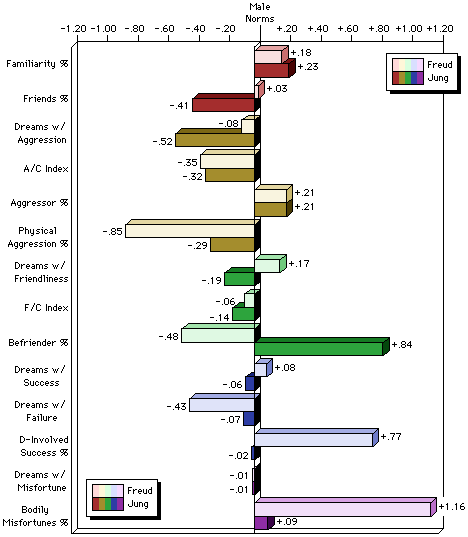
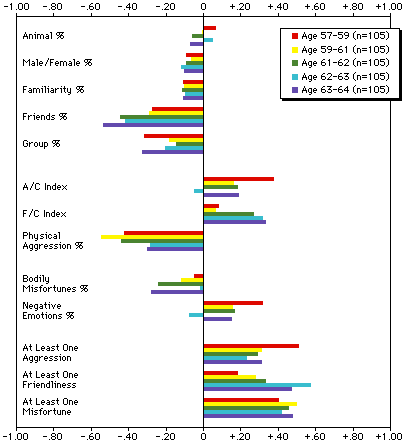
The h-profile can be used to compare one or more individuals to the norms. Figure 1 presents the h-profiles for Freud [47] and Jung's [48] dreams, based on codings Hall [49] did in the 1960s, before the h-profile was developed. It shows the ways that Freud and Jung differ from the male norms (e.g., both are low on the aggressions/character (A/C) ratio, physical aggression percent, and victimization percent), and the main ways in which they differ from each other (e.g., Jung befriends other characters, Freud is befriended by other characters). The h-profile also can be useful in displaying the consistency of what a person dreams about over a period of years, as seen in Figure 2, which is based on five subsets of 105 dreams from an eight-year journal of 525 dream reports provided by a woman in her late 50s; except for the A/C ratio and negative emotions percent in the third set, and perhaps a trend toward greater friendliness over the eight-year period, she is generally consistent in what she dreams about.
Figure 2. Consistency in five dream samples of 105 dreams each from an older woman.
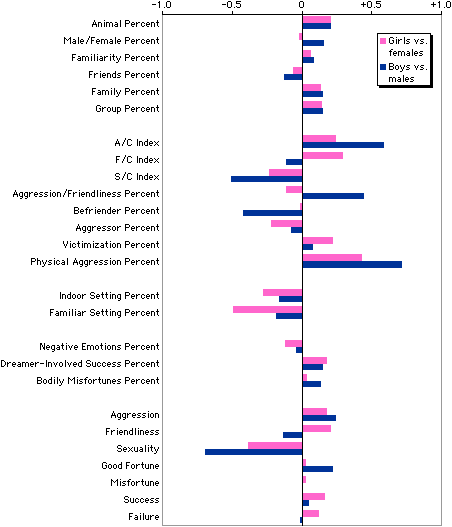
Finally, the usefulness of h-profiles for group comparisons is shown in Figure 3, where the Most Recent Dreams of 12-13 year-old girls and boys are compared with each other and with the norms for women and men by using the norms for women and men as the baseline [29]. It reveals that girls and boys tend to differ from each other in the same ways women and men differ, with the young teenagers further from the adults on the A/C ratio and physical aggression percent. However, girls and boys go in different ways on the friendliness/character (F/C) ratio; girls have more friendly interactions than women, boys have less friendly interactions than men.
Figure 3. A comparison of the deviations of seventh-grade boys from the Male Norms and seventh-grade girls from the Female Norms.
An Efficient Method for Analyzing Large Samples
It is very time consuming to use any of the full scales from the Hall/Van de Castle system with samples of many hundreds or thousands of dream reports. This is especially the case for the detailed character categories, and for the social interaction indicators that are based in part in character codings. Useful findings can be developed very quickly, however, if the reports are coded for the presence or absence of one or more of seven general categories: aggression, friendliness, sexuality, misfortune, success, failure, and food/eating. With this "at least one" approach, coders move on to the next report as soon as they have recorded the first instance of the category or categories being utilized. The norms for this type of analysis are included at the bottom of Table 1.
This method can be used to see how groups or individuals differ from the norms, or to study consistency over time. Figure 3 shows the consistency of aggression and sexuality over a 14-year period in 3,256 dream reports from a young adult male who began his journal at age 18. All dream reports from 1981 to 1989 and for 1995-96 were examined separately by each author in the space of a few hours. The relatively consistent findings for aggression are somewhat below the norms and the very consistent findings for sexuality are very close to the norms.
Figure 3. Consistency in the percentage of dreams with at least one aggression and at least one sexuality in a young adult male from ages 18 to 32.
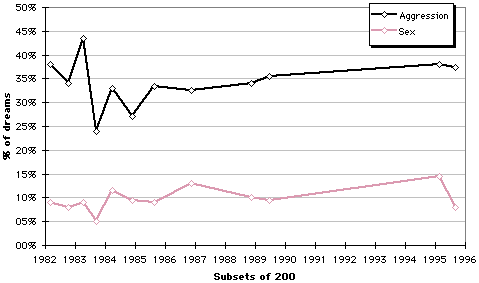
The one major drawback with the "at least one" approach is that it does not control for dream length, so reports of less than 50 or more than 350 words should not be used in making comparisons with the Hall/Van de Castle norms because they excluded such reports in determining the norms [7]. However, no such screening for length is necessary if the comparison is with other dream reports in a long dream journal, as is the case in Figure 4.
Discussion
Although the long-term usefulness of the methods of data collection and data analysis presented in this methodological note can only be determined through widespread testing, they may have immediate application for researchers who already have dream reports in hand, whether from laboratory awakenings or everyday recall. For those who have files containing coded dream reports that have not been fully analyzed, the spreadsheet on the Web site offers an immediate way to develop new findings. For those who have large samples of dream reports that never have been coded, the "at least one" approach provides an avenue to useful findings on such interesting categories as aggression, friendliness, misfortune, success, and failure in the space of a relatively few hours.
In the long run, however, the rationales of data collection and methods of content analysis suggested in this paper must be validated through blind analyses that lead to correct inferences about the cognitive conceptions and personal concerns of the groups or individuals under study [8]. These methods are not a substitute for laboratory studies of dreaming, and the dream reports are not completely representative of dream content as it is revealed in the laboratory, but studies using these methods may be helpful in bridging the gap in the scientific study of dreams until such time as more laboratory studies are once again feasible.
Acknowledgements
Our thanks to David Foulkes and Richard Zweigenhaft for their very helpful comments on the first draft of this paper, and to the anonymous reviewer who asked that we elaborate slightly on our substantive findings and address the issue of validity more directly.
References
- Foulkes, D. (1996). Dream research: 1953-1993. Sleep, 19, 609-624.
- Aserinsky, E., Kleitman, N. (1953). Regularly occurring periods of eye motility, and concomitant phenomena, during sleep. Science, 118, 273-4.
- Dement, W., Kleitman, N. (1957). The relation of eye movements during sleep to dream activity: an objective method for the study of dreaming. J Exp Psychol , 53, 339-46.
- Kramer, M. (1969). Dream psychology and the new biology of dreaming. Springfield, IL: Charles C. Thomas.
- Foulkes, D. (1985). Dreaming: a cognitive-psychological analysis. Hillsdale, NJ: Lawrence Erlbaum Associates.
- Moffitt, A., Kramer, M., Hoffman, R. (1993). The functions of dreams. Albany, NY: SUNY Press.
- Hall, C. S., Van de Castle, R. L. (1966). The content analysis of dreams. New York: Appleton-Century-Crofts.
- Domhoff GW. (1996). Finding meaning in dreams: a quantitative approach. New York: Plenum.
- Domhoff, G. W., Kamiya, J. (1964). Problems in dream content study with objective indicators: I. A comparison of home and laboratory dreams. Arch Gen Psychiatry, 11, 519-24.
- Hall, C. S., Van de Castle, R. L. (1966). Studies of dreams reported in the laboratory and at home. Santa Cruz, CA: Institute of Dream Research.
- Weisz, R., Foulkes, D. (1970). Home and laboratory dreams collected under uniform sampling conditions. Psychophysiology, 6, 588-96.
- Foulkes, D. (1979). Home and laboratory dreams: four empirical studies and a conceptual reevaluation. Sleep, 2, 233-51.
- Yamanaka, T., Morita, Y., Matsumoto, J. (1982). Analysis of the dream contents in college students by REM-awakening technique. Folia Psychiatrica et Neurologica Japonica., 36, 33-52.
- Bose, V. S. (1982). Dream content transformations: an empirical study of Freud's secondary revision hypothesis. Ph.D. dissertation. Andhra University, Waltair, India.
- Strauch, I., Meier, B. (1996). In search of dreams: results of experimental dream research. Albany, NY: SUNY Press.
- Domhoff, G. W., Kamiya, J. (1964). Problems in dream content study with objective indicators: III. Changes in dream content throughout the night. Arch Gen Psychiatry, 11, 529-532.
- Dement, W., Wolpert, E. (1958). Relationships in the manifest content of dreams occurring in the same night. Journal of Nervous and Mental Disease, 126, 568-578.
- Trosman, H., Rechtschaffen, A., Offenkrantz, W., Wolpert, E. (1960). Studies in the psychophysiology of dreams. IV: Relations among dreams in sequence. Arch Gen Psychiatry, 3, 602-607.
- Domhoff, B. (1969). Home dreams and laboratory dreams: home dreams are better. In: M. Kramer, ed., Dream psychology and the new biology of dreaming. Springfield, IL: CC Thomas, 199-217.
- Meier, C., Ruef, H., Zeigler, A., Hall, C. S. (1968). Forgetting of dreams in the laboratory. Percept Mot Skills, 26, 551-557.
- Baekeland, F., Lasky, R. (1968). The morning recall of rapid eye movement reports given earlier in the night. Journal of Nervous and Mental Disorders, 147, 570-579.
- Strauch, I. Psychological aspects of dream recall. 19th Int Congress of Psychology, London.
- Trinder, J., Kramer, M. (1971). Dream recall. Am J Psychiatry, 128, 296-301.
- Hartmann, E. (1992). Boundaries of the mind. New York: Basic Books.
- Hartmann, E., Elkin, R., Garg, M. (1991). Personality and dreaming: the dreams of people with very thick or very thin boundaries. Dreaming, 1, 311-324.
- Hall, C. S., Domhoff, G. W., Blick, K., Weesner, K. (1982). The dreams of college men and women in 1950 and 1980: a comparison of dream contents and sex differences. Sleep, 5, 188-194.
- Dudley, L., Swank, M. (1990). A comparison of the dreams of college women in 1950 and 1990. ASD Newsletter, 7, 3.
- Tonay, V. (1990). California women and their dreams: a historical and sub-cultural comparison of dream content. Imag Cogn Persy, 10, 83-97.
- Avila-White, D., Schneider, A., Domhoff, G. W. (1999). The most recent dreams of 12-13 year-old boys and girls: a methodological contribution to the study of dream content in teenagers. Unpublished manuscript.
- Webb, E., Campbell, D., Schwartz, R., Sechrest, L. (1966). Unobtrusive measures: nonreactive research in the social sciences. Chicago: Rand McNally.
- Hobson J. A. (1988). The dreaming brain. New York: Basic Books.
- Winget, C., Kramer, M. (1979). Dimensions of dreams. Gainesville: University Presses of Florida.
- Hall, C., Domhoff G. W. (1963). Aggression in dreams. Int J Soc Psychiatry, 9, 259-267.
- Hall, C., Domhoff G. W. (1963). Friendliness in dreams. J Soc Psychology., 62, 309-314.
- Zepelin, H. (1980). Age differences in dreams: I. Men's dreams and thematic apperceptive fantasy. Int J Aging Human Devel, 12, 171-186.
- Zepelin, H. (1981). Age differences in dreams: II. Distortion and other variables. Int J Aging Human Devel. 13:37-41.
- Kramer, M., Winget, C., Whitman, R. (1971). A city dreams: a survey approach to normative dream content. Am J Psychiatry, 127, 1350-1356.
- Winget, C., Kramer, M., Whitman, R. (1972). Dreams and demography. Canad Psychiatry Assoc J, 17, 203-208.
- Brenneis, C. (1975). Developmental aspects of aging in women: a comparative study of dreams. Arch Gen Psychiatry, 32, 429-434.
- Howe, J. B., Blick, K. (1983). Emotional content of dreams recalled by elderly women. Percept Mot Skills., 56, 31-34.
- Lortie-Lussier, M. (1995). Continuity and change: the dreams of women throughout adulthood. Association for the Study of Dreams meeting, New York.
- Hall, C. S. (1969). Content analysis of dreams: categories, units, and norms. In: G. Gerbner, ed., The analysis of communication content. New York: Wiley, 147-158.
- Hall, C. S. (1969). Normative dream content studies. In: M. Kramer, ed., Dream psychology and the new biology of dreaming. Springfield, IL: Charles C. Thomas, 175-184.
- Van de Castle, R. L. (1969). Problems in applying methodology of content analysis. In: M. Kramer, ed., Dream psychology and the new biology of dreaming. Springfield, IL: Charles C. Thomas, 185-197.
- Schneider, A., & Domhoff, G. W. (1999). The quantitative study of dreams. [Web site.] Available: http://www.dreamresearch.net/
- Cohen, J. (1977). Statistical power for the behavioral sciences. New York: Academic Press.
- Freud, S. (1900). The interpretation of dreams (J. Strachey, trans.). New York: Basic Books (1955 edition).
- Jung, C. (1963). Memories, dreams, reflections. New York: Pantheon.
- Hall, C., Domhoff, G. W. (1968). The dreams of Freud and Jung. Psychology Today, 2, 42-45.
 Go back to the Dream Library index. Go back to the Dream Library index.
|
